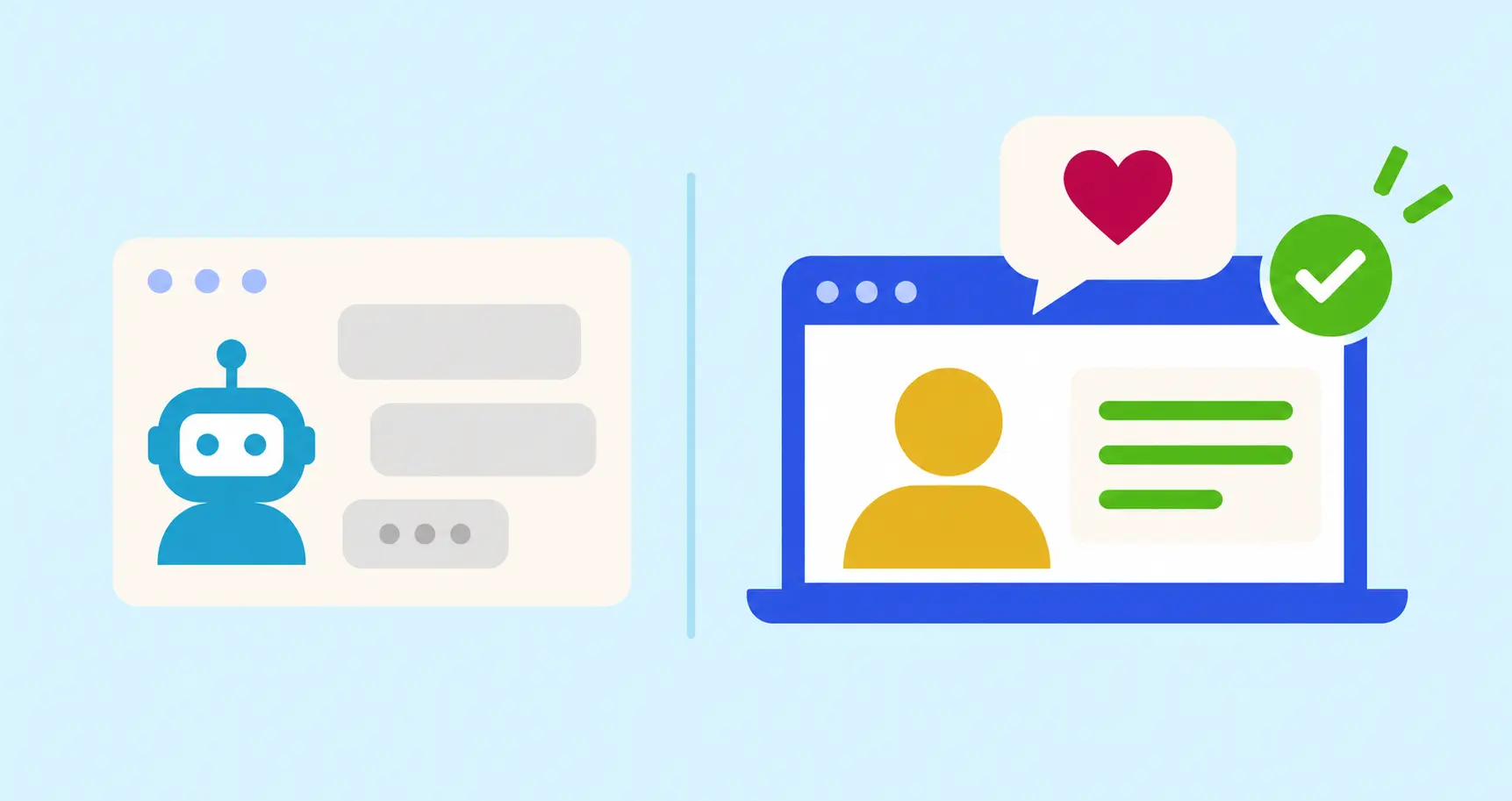
The most useful thing a student tells me all session is something they never type: they keep erasing a correct answer because they don’t trust it. That eraser tells me the skill is already there and the confidence is gone, and none of it ever reaches a screen.
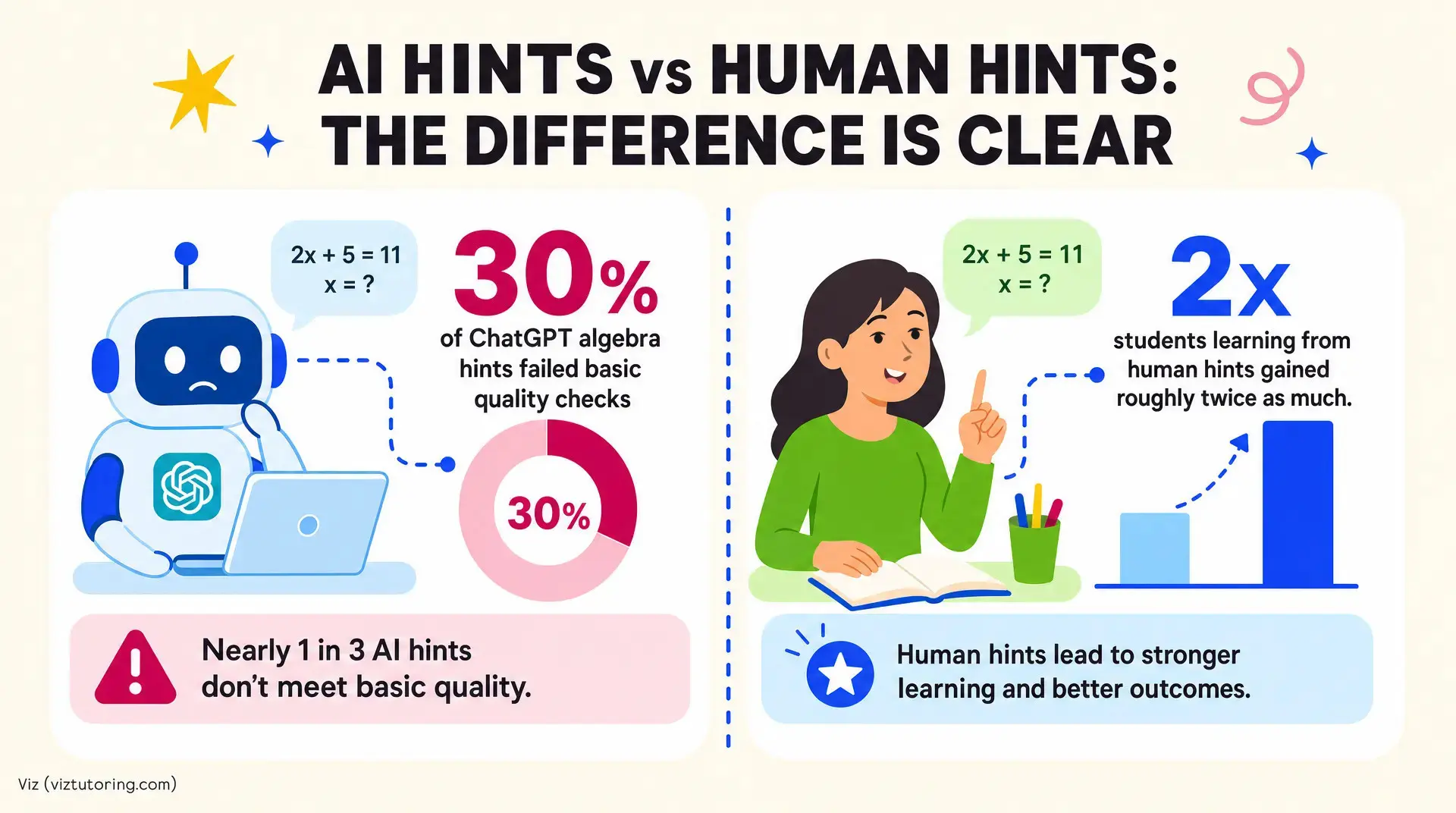
A chatbot answers the question they finally submit and log it as a clean success, oblivious to their hands, their too-long pause, and the four children who reach the same wrong answer for different reasons. It is also wrong more often than parents assume – when researchers graded its work, 30% of its algebra hints failed basic quality checks.
We have automated the explaining and called it teaching. Explaining was always the easy half of my job.
Key Takeaways
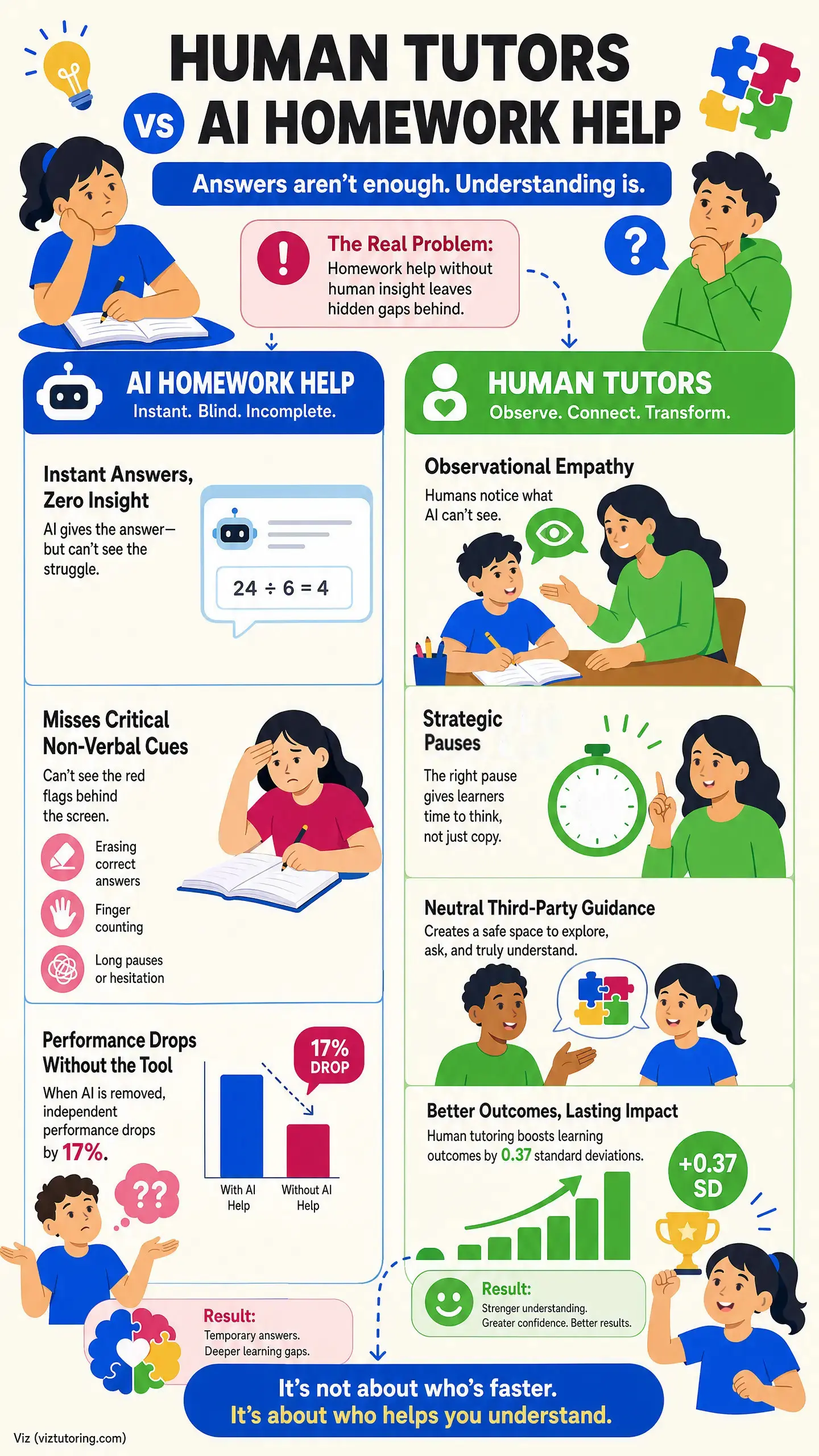
- When researchers evaluated ChatGPT-written algebra hints, nearly 30% had incorrect answers or solution steps, highlighting the need for human oversight when AI is used for academic support.
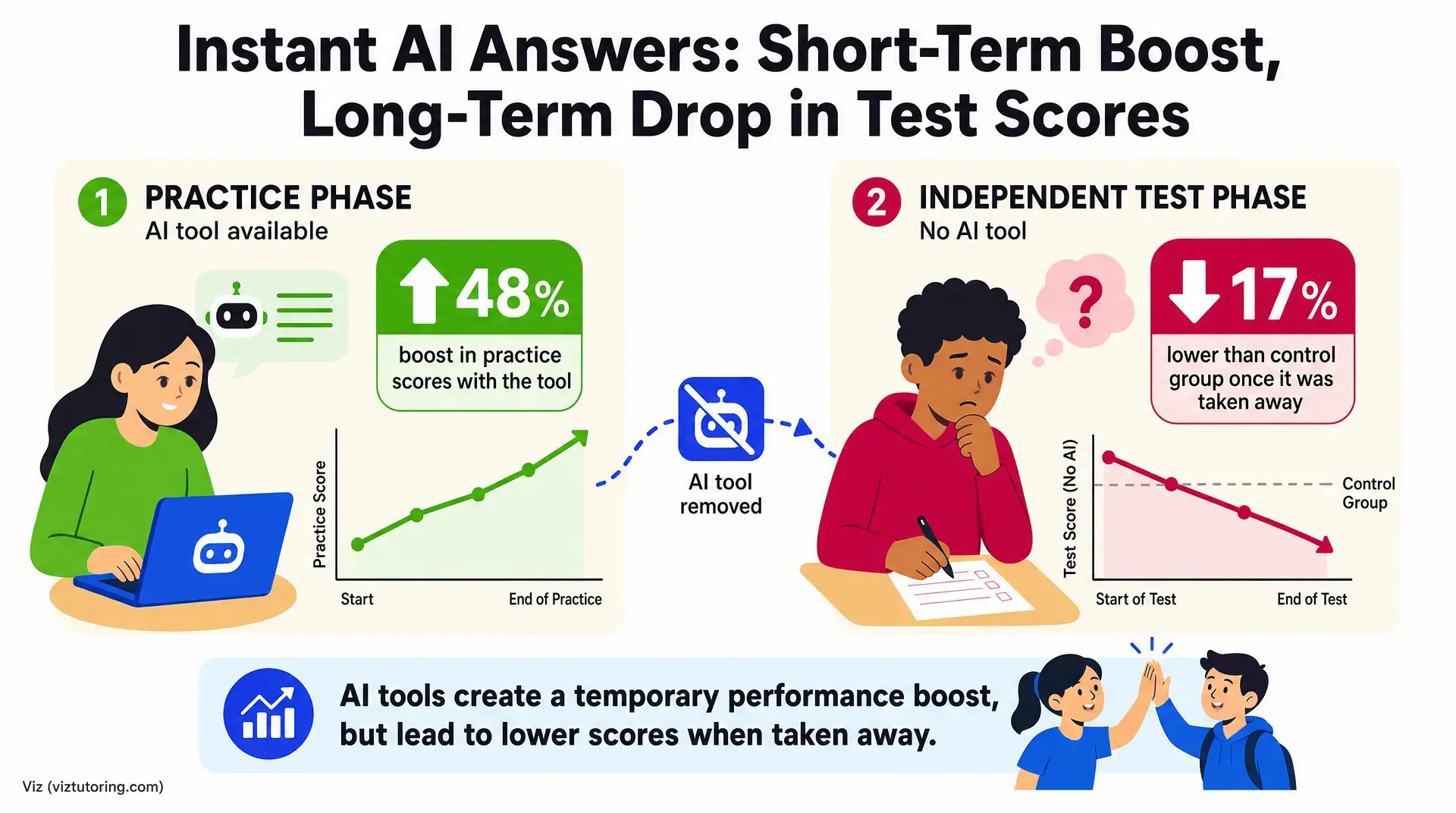
- A field experiment with nearly 1,000 high school students revealed that using ChatGPT-style tools boosted practice scores by 48% but caused a 17% drop in independent performance.
- While classroom teachers typically wait less than one second for an answer, human tutors use intentional longer pauses to force independent student problem-solving.
- A meta-analysis of more than 16,000 students found that controlling parental homework help was measurably associated with lower math achievement, while autonomy-supportive help was linked to better outcomes.
- Human tutors diagnose foundational academic gaps by observing non-verbal cues entirely overlooked by AI chatbots, such as a student repeatedly erasing a correct answer out of anxiety.
- Ontario’s Grades 4–8 class-size rules allow board-wide averages of up to 24.5 students, leaving limited time for the kind of one-on-one attention needed to identify exactly where an individual student is struggling.
Why Does AI Homework Help Fail to Diagnose the Root Causes of Incorrect Student Answers?
Two students can type the exact same wrong homework question into ChatGPT, and both will get back the same tidy explanation. From where I sit, those two kids might need completely opposite things.
One student truly doesn’t know the concept at all. Another knows it fine but rushes and skips steps so he can get back to his video games. A third can follow every step perfectly while someone works beside her, then stares blankly the moment she has to start on her own. And a fourth decided somewhere around Grade 4 that she’s bad at math, so she skipped the question before even trying and just asked AI for the answer.
I say this to parents about report cards all the time, and it applies word for word to AI: a failing grade might tell me the outcome, but not the cause. An AI answer works the same way. It responds to the question it’s given. It has no idea which of those four kids is sitting on the other side of the screen, and each one needs a completely different session from me.
The quality problem runs deeper than diagnosis, too. When researchers compared ChatGPT-written algebra hints against human-written ones, 30% of the AI hints failed basic quality checks, and students learning from the human hints showed significantly greater learning gains. The machine isn’t just blind to the child. Sometimes it’s wrong about the math.
What Diagnostic Non-Verbal Signals Do AI Chatbots Miss During Student Tutoring Sessions?
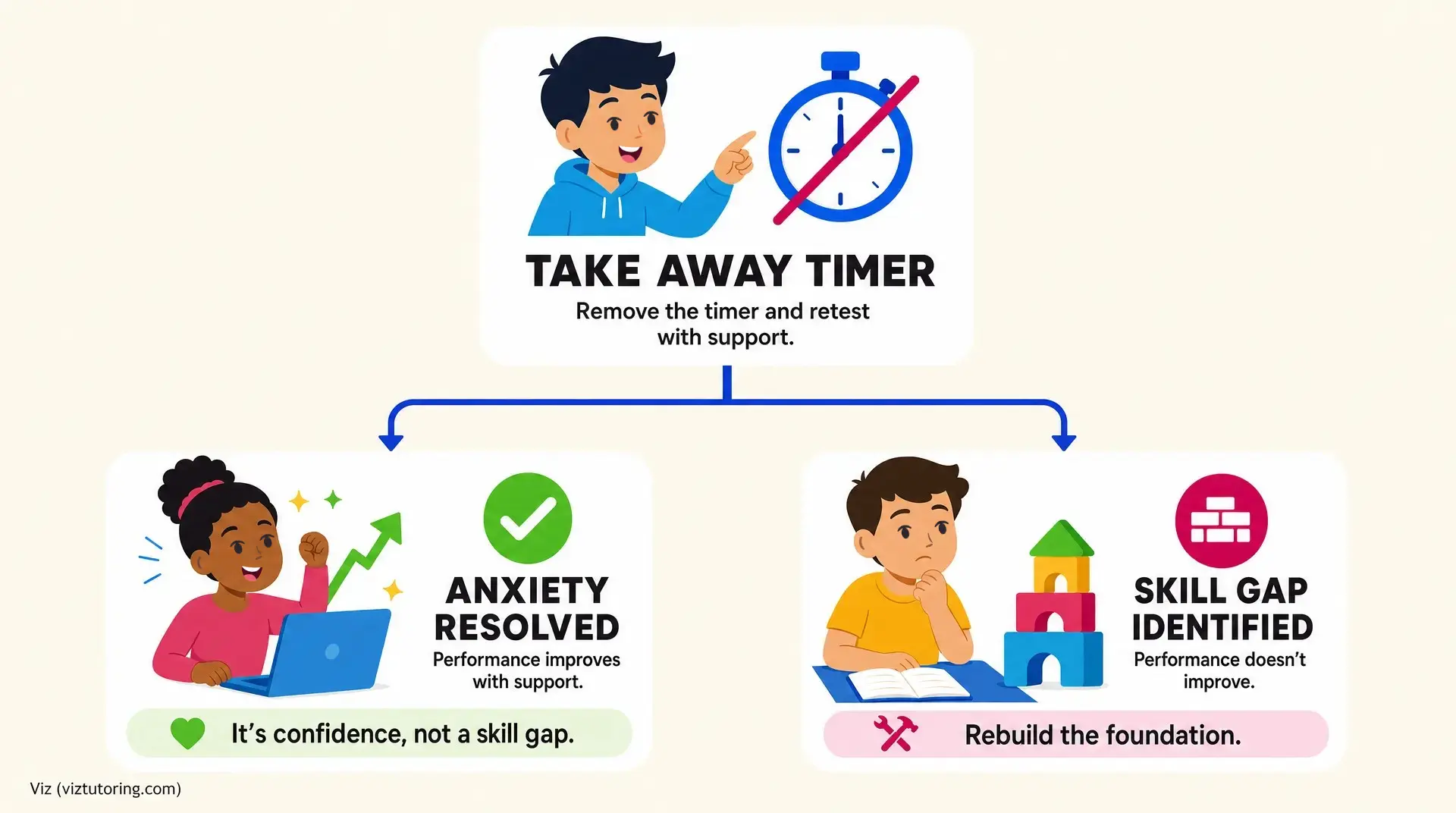
In a live session, I’m watching for things that never show up in a chat window. A really long pause before answering. A change in tone. A student who suddenly goes quiet. A kid who says “yeah, I get it” a little too quickly. And the one that gets me every time, a student who keeps erasing a correct answer because they doesn’t trust themself.
Parents tend to read those moments as emotions to manage. For me, they’re diagnostic information. The eraser tells me the skill is there and the confidence isn’t, which changes everything about what I do next.
The most useful pattern I’ve found over the years is consistency. Anxiety makes performance fluctuate quite a bit, while foundational gaps show up repeatedly, in a recognizable pattern. A student who gets one question right, bombs the next, then nails the third has a pressure problem. A student who makes the same denominator mistake every single time has a multiplication problem hiding underneath, and no amount of encouragement fixes a missing skill.
Every tutor at Viz is trained to read these signals, right down to the quiet overcompensations, like finger counting under the table or little margin notes for math facts that should be automatic by that grade.
Why Is Asking Students if They Understand Ineffective for Assessing True Academic Comprehension?

I want to walk you through a real session, because this is where the difference gets concrete.
I was working with a student on algebra, a brand-new concept for him. We went through it slowly. I solved a couple of problems out loud, explaining what I was doing and why, step by step. He nodded along with everything. We solved one together, and every time I checked in, he said, “yeah, I get it.”
Then I put a very similar problem in front of him to do independently. He just sat there. He didn’t start. He kept glancing back at the previous problem, trying to copy my steps in order. That was the giveaway. He was tracking my process, following what I did, without actually understanding any of it. So instead of explaining everything again, I said, okay, wait, don’t solve anything yet. Just tell me what you think you should do first, and why.
He couldn’t. That one question changed the entire lesson. We backed up and worked on what the equation actually meant, instead of rehearsing steps he’d forget by Friday.
That session taught me something I’ve carried ever since: “Do you understand?” is often a terrible assessment question. Kids always want to say yes. Saying no makes them feel stupid in front of an adult they want to impress. And a lot of the time they genuinely believe they understand, because it made sense while they watched someone else do it. There’s solid evidence behind asking kids to explain instead. In one classic study, eighth graders who explained a science passage to themselves, line by line, learned far more than the group that simply reread it.
Now run my algebra student through a homework app. The app logs a success. Steps followed, answer correct, session complete. The gap stays invisible until the unit test, and by then you’re wondering why the “help” isn’t helping.
Why Do Instant AI Homework Answers Negatively Impact Long-Term Student Academic Performance?
The main selling point of AI homework help is that it’s instant. I understand the appeal better than most, honestly, because I built on-demand sessions into Viz for the same reason. We live in an instant gratification world. Kids get stuck at 9 p.m. the night before a test, and waiting four days for a tutoring appointment doesn’t match how families actually live.
But instant access to a person and instant answers from a machine are two very different products. A field experiment published in PNAS with nearly 1,000 high school math students found that a standard ChatGPT-style tool boosted practice scores by 48% while students had it, and then those same students scored 17% lower than the control group once it was taken away. The tool did the thinking, so the students never built any of their own.
That finding matches what I do in almost every session, which is deliberately not helping right away. When I can see a student is close to figuring something out, I’ll wait a little longer before offering a prompt or the next step. That pause is uncomfortable, for both of us. It’s also where the learning actually happens. Classroom research found teachers typically wait less than one second after asking a question, and researchers pushing for longer pauses recommend three to five seconds. I’m asking my tutors to wait a little longer, because if I jump in too quickly, the problem gets solved, but the student doesn’t gain that understanding. And if I give them too much help, that can actually make them think they can’t do it alone.
AI can’t hold back. It answers the instant it’s asked, every time, by design. Sometimes a student needs the full explanation. Sometimes they need one hint. Sometimes they need a small confidence boost, and sometimes they need a tutor who knows them well enough to just stay quiet.
How Does Parental Homework Help Trigger Threat Responses and Math Anxiety in Students?

Now the situation parents describe to me most often: the nightly homework battle that ends with everyone upset.
In those moments, the block usually has very little to do with the worksheet. It comes from what the interaction has started to mean for the child. You’re saying, “I’m just trying to help you.” Your child is experiencing that same moment as, “you’re watching me get this wrong.” And because the correction is coming from a parent whose approval matters enormously, the stakes suddenly feel much higher than the worksheet deserves.
Once that happens, the math is beside the point. You’re dealing with a threat response. It can look like arguing, going silent, saying “I don’t care,” refusing an obviously good suggestion, or melting down over something that seems tiny from the outside. There’s a cognitive piece underneath the emotional one, too. A child worried about being evaluated is spending mental capacity on that worry, capacity they need to actually think through the problem. Researchers have traced how math anxiety drains working memory during arithmetic. So the more a parent pushes, because they can see their child isn’t thinking clearly, the harder clear thinking can become. It’s a really, really bad feedback loop, and the numbers back it up. A meta-analysis covering more than 16,000 students found supportive parental homework help barely moved math achievement, while controlling, intrusive help measurably associated with lower achievement.
The single most damaging line I hear from well-meaning parents is “you just need to try harder.” A lot of the time, I’m watching kids who are already trying really, really hard while working around a hidden gap nobody has noticed.
This is where a neutral third person proves their value. A tutor carries no history and no emotional baggage into the correction. When I say “try this another way,” a child hears information. After 20 minutes of kitchen-table tension, the exact same words from a parent land as criticism. Sometimes a child isn’t rejecting the help. They’re trying to get out of the feeling that comes with being helped.
And handing your child a chatbot doesn’t repair any of this. It ends the argument, sure. It also leaves your child alone at the table with the exact frustration that started the argument.
How Do Human Tutors Use Empathy to Improve Student Engagement and Motivation?
Empathy gets used as a soft, fuzzy word in education. In tutoring, it’s a working tool, and I can show you what it produces.
I tutored a boy in Grade 4 who hated writing and had fully settled into “I’m just not a writer.” He loved hockey. So his assignment became a day in the life of a hockey puck. He wrote about the puck’s feelings during a slap shot, the noise of the crowd, getting stolen from one team by the other. Parts of it genuinely made me laugh. I still had to guide and prompt him along the way, but the kid who couldn’t write suddenly couldn’t stop. No writing app opens that door. Someone had to know he loved hockey first, then build the work around it.
How Do Human Tutors Use Observational Empathy to Diagnose Hidden Foundational Math Gaps?
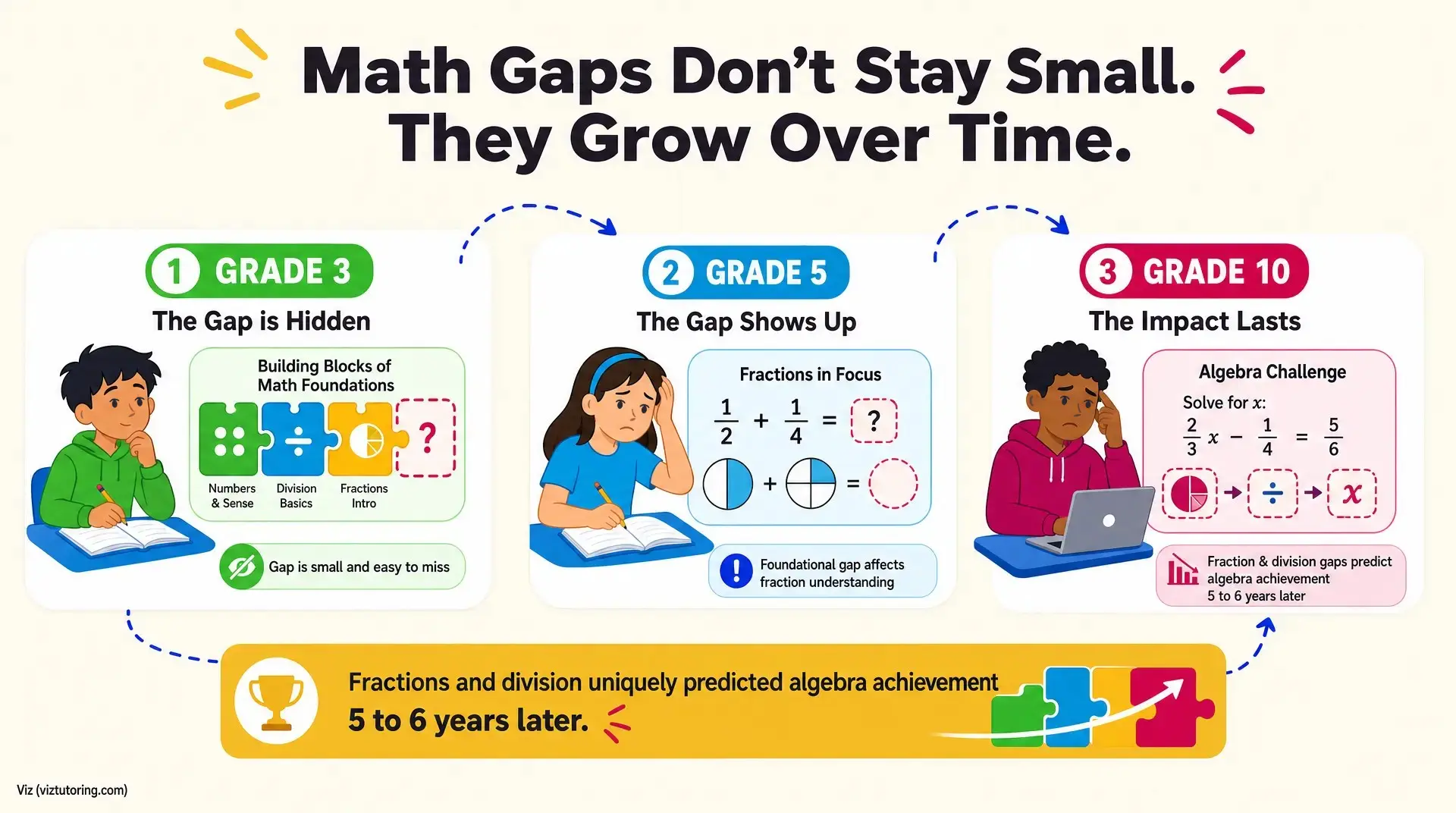
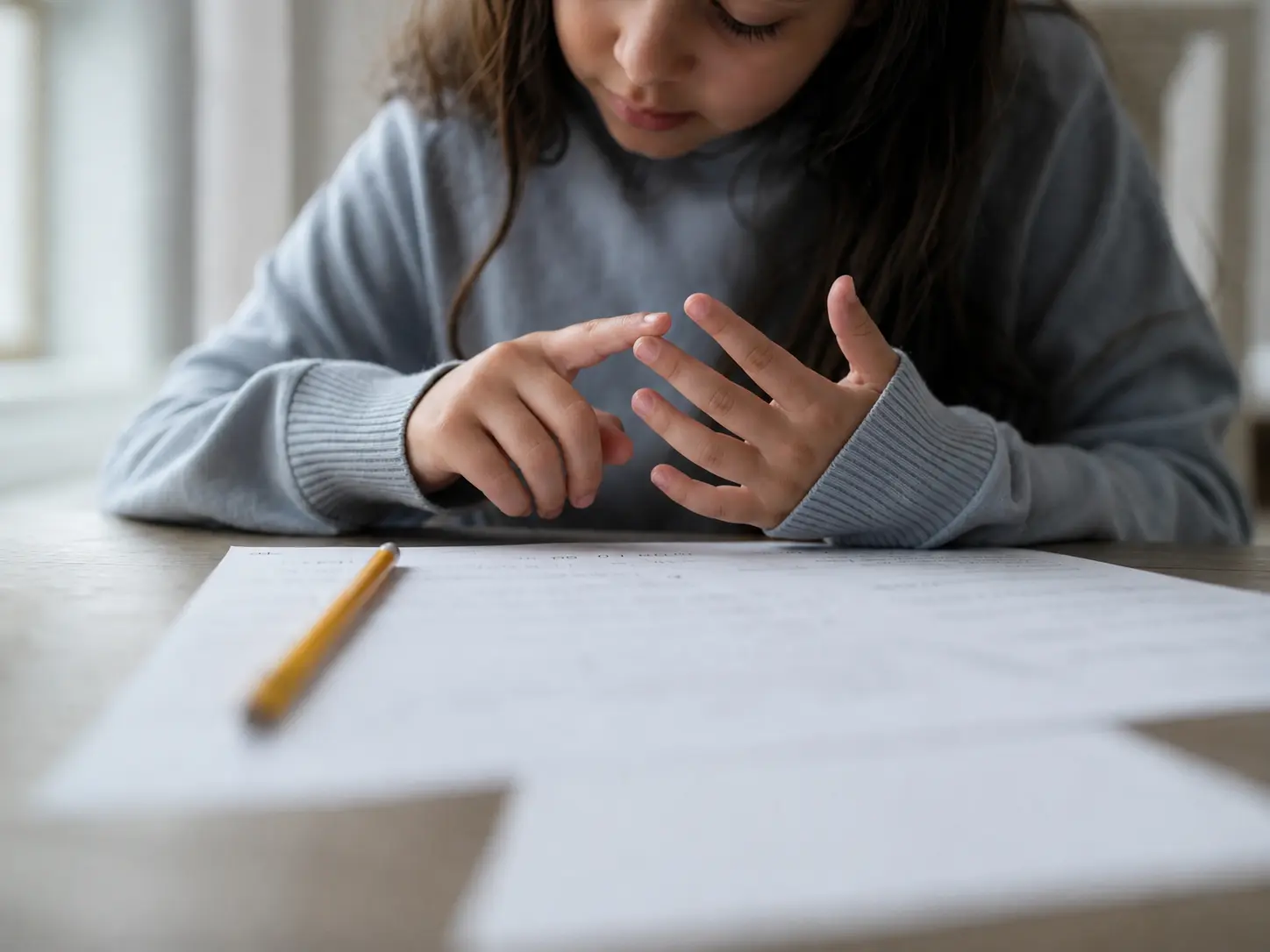
Another Grade 5 student had just moved to Toronto from New York and was having full meltdowns over homework with her parents. Everyone around her assumed the Grade 5 material was the problem. Instead of asking how to get her through the nightly worksheet, I asked a different question: what does this assignment assume my child already knows? Then I noticed something small during a session. She was still counting on her fingers.
So we set the grade-level work aside completely and rebuilt her math foundation with manipulatives and much smaller steps. Over time she became more independent, more confident, and needed less and less support from me. Sometimes it’s okay if a student is behind curriculum, because they need that time to be caught up. Sometimes the fastest way forward academically is actually to go backwards for a few minutes.
No app notices finger counting. AI reads the typed question. It can’t see the hands.
What Are the Diagnostic and Psychological Benefits of Hiring a Private Human Tutor?

The honest dividing line, from my experience, looks like this. When your child is confident, motivated, and knows exactly what to practice, free tools are fine. The tools stop being enough when the situation turns diagnostic: homework that should take 20 minutes stretching past an hour, battles that keep centering on the same subject, a child who suddenly announces “I’m bad at math,” grades sliding while your child insists they understand everything. In each of those situations, something underneath the worksheet has to be found first, and finding it is human work.
I tell parents this directly. They aren’t paying me $50 to $80 an hour for access to information. They can get information anywhere. What they’re paying for is a qualified person who can figure out where their child is stuck, catch the misread question, spot the missing skill from two grades back, and rebuild the confidence that months of quiet struggling wore down. The research reflects that. A meta-analysis of PreK-12 experiments found tutoring moved learning outcomes by 0.37 standard deviations, which puts it among the most consistently effective interventions education researchers have ever measured.
And the person matters more than the paper. I’ve rejected tutor candidates with flawless resumes, degrees and references included, because when I ran a mock session with them, they couldn’t relate, couldn’t draw anything out of a student. Being personable is my one non-negotiable, and no AI benchmark measures it.
Why Do Public School Classroom Limitations Drive the Need for Individualized Human Tutoring?
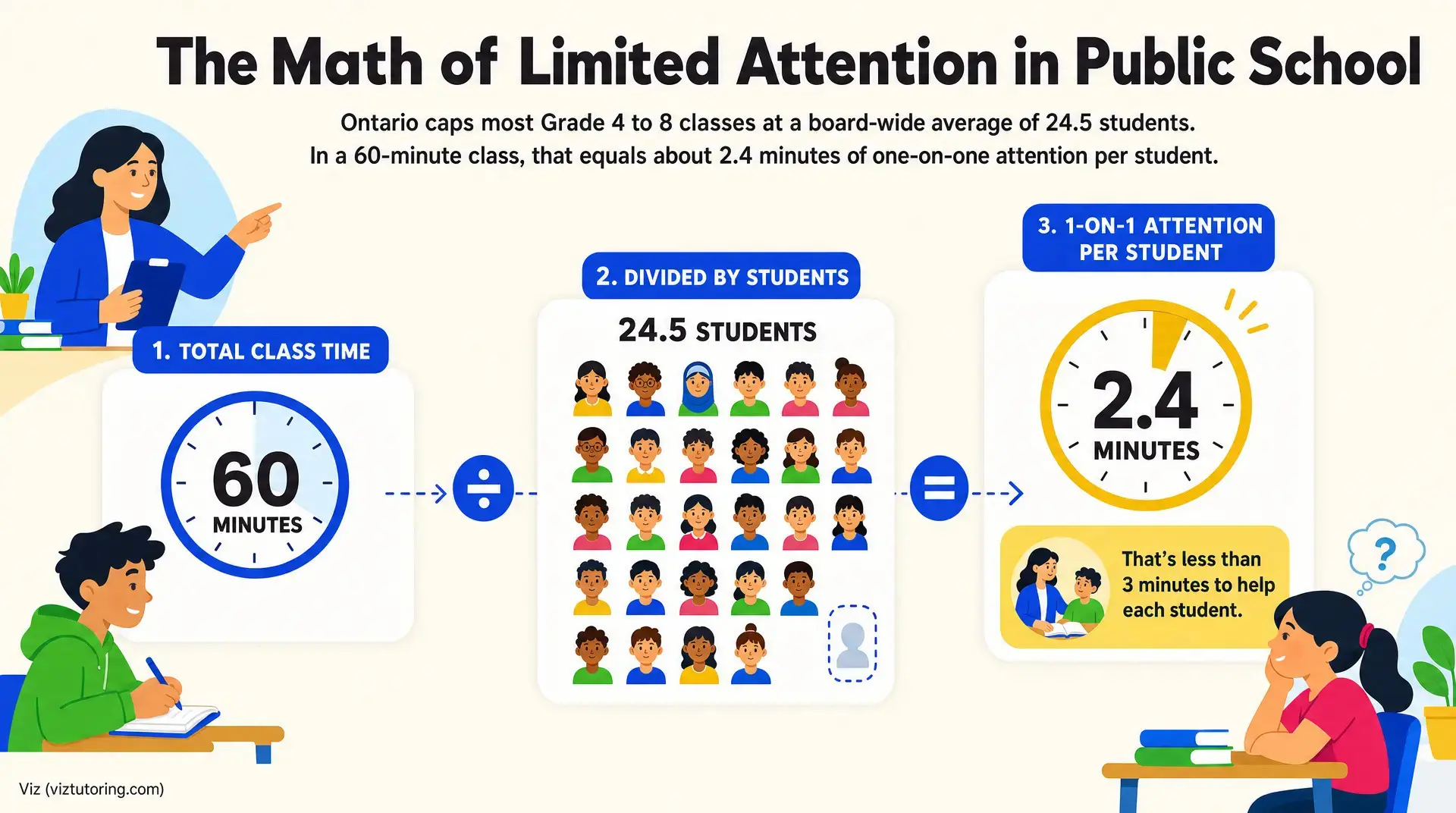
I’ll finish with the math that ultimately pushed me beyond the classroom. Ontario caps most Grade 4 to 8 classes at a board-wide average of 24.5 students. Run the numbers on a 60-minute class and you get about 2.4 minutes of one-on-one attention per student, and that’s only if you never actually teach a lesson. I lived inside that math for years. It’s not a criticism of teachers, it’s more so a limitation of the school and classroom model, which simply cannot provide individualized attention at the exact moment a child needs it.
AI companies promise to fill that gap with speed. From everything I’ve seen in over 10 years of sessions, speed was never the real gap. Attention was. A child falls behind when nobody catches the exact moment her confusion starts, the pause that runs too long, the right answer erased out of self-doubt, the “I get it” that comes too fast. Catching those moments takes a person who is watching your child, not just reading her question.
That’s the whole reason Viz exists. Vetted, personable human tutors, matched to your child’s interests, available on a schedule or on demand when the 9 p.m. panic hits. Answers are everywhere now, and most of them are free. The adult who actually notices your child has become the scarce resource in education, and that’s why empathy wins every time.
Frequently Asked Questions
Is AI homework help a good substitute if we are on a tight budget?
While ChatGPT Plus costs just $20/month, it only provides cheap answers, not true academic diagnosis. You aren’t paying a human tutor just for information. You’re investing in a professional who spots hidden foundational gaps and rebuilds your child’s confidence. AI simply cannot do that.
Will relying on a human tutor make my child dependent on outside help?
No, a good human tutor builds true independence through strategic patience. Unlike instant AI answers, which cause students to score 17% lower when access is removed, a human’s deliberate wait-time forces your child to do the cognitive heavy lifting themselves, ensuring long-term mastery.
Can a human tutor help with my child’s severe test anxiety better than an app?
Absolutely. AI cannot soothe a nervous system. Research shows math anxiety drains working memory, explaining 56% of the variance in arithmetic performance. A human tutor identifies this panic, removes the fear of failure, and creates a supportive environment where clear thinking is possible.
What kind of measurable academic improvement does human tutoring provide over AI?
Human tutoring drives significantly higher comprehension. In a recent algebra study, students learning from human-authored hints saw gains of 24.63%, more than double the 11.14% gain from ChatGPT hints. Humans adapt to how your child uniquely learns, ensuring concepts actually stick.
How does a human tutor ensure my child actually remembers the material for their exams?
We use active retrieval, not passive explanation. Instead of just showing steps like an app, we prompt your child to recall information. Students who practice effortful retrieval remember 56% of material after a week, compared to just 42% who passively re-read. We build lasting retention.